Weather Alert in Indiana
Flood Warning issued April 3 at 12:14PM EDT until April 10 at 5:36PM EDT by NWS Indianapolis IN
AREAS AFFECTED: Fountain, IN; Parke, IN; Vermillion, IN; Warren, IN
DESCRIPTION: ...The Flood Warning continues for the following rivers in Indiana... Illinois... Wabash River at Covington. Wabash River at Montezuma. Wabash River at Terre Haute. Wabash River at Lafayette. ...The Flood Warning is extended for the following rivers in Indiana...Illinois... Wabash River at Hutsonville Legacy Power Plant Site. .Multiple rounds of rainfall have brought lowland flooding to the Wabash River basin. The Wabash is expected to crest at Lafayette on Sunday, but the crest is not expected to reach the lower Wabash until the weekend of April 11th. The current river forecast includes expected rainfall amounts of 0.75 to 1.25 inches in the Wabash basin through Sunday morning, when dry weather is expected to move into the area. Variations from those expected amounts could change the crests as well as the amount of time spent in flood at any given location. * WHAT...Minor flooding is occurring and minor flooding is forecast. * WHERE...Wabash River at Covington. * WHEN...Until Friday, April 10. * IMPACTS...At 21.0 feet, Lanes to river residences west of South River Road south of Covington flooded. Sandhill Road at Mud Run just northeast of Covington begins to flood. Extensive lowland flooding in progress. Higher bottomlands flood. * ADDITIONAL DETAILS... - At 11:45 AM EDT Friday the stage was 18.1 feet. - Recent Activity...The maximum river stage in the 24 hours ending at 11:45 AM EDT Friday was 18.1 feet. - Forecast...The river is expected to rise to a crest of 21.3 feet early Monday morning. It will then fall below flood stage Friday, April 10. - Flood stage is 16.0 feet. - http://www.weather.gov/safety/flood
INSTRUCTION: Motorists should not attempt to drive around barricades or drive cars through flooded areas. Turn around, don't drown when encountering flooded roads. Most flood deaths occur in vehicles. Those with interests along area rivers should monitor for forecast updates through the weekend. Additional information is available at www.weather.gov/ind. The next statement should be issued this evening by around 1130 PM EDT /1030 PM CDT/.
Want more detail? Get the Complete 7 Day and Night Detailed Forecast!
Current U.S. National Radar--Current
The Current National Weather Radar is shown below with a UTC Time (subtract 5 hours from UTC to get Eastern Time).

National Weather Forecast--Current
The Current National Weather Forecast and National Weather Map are shown below.

National Weather Forecast for Tomorrow
Tomorrow National Weather Forecast and Tomorrow National Weather Map are show below.

North America Water Vapor (Moisture)
This map shows recent moisture content over North America. Bright and colored areas show high moisture (ie, clouds); brown indicates very little moisture present; black indicates no moisture.

Weather Topic: What are Nimbostratus Clouds?
Home - Education - Cloud Types - Nimbostratus Clouds
 Next Topic: Precipitation
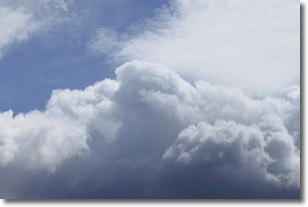
A nimbostratus cloud is similar to a stratus cloud in its formless,
smooth appearance. However, a nimbostratus cloud is darker than a stratus cloud,
because it is thicker.
Unlike a stratus cloud, a nimbostratus cloud typically brings with it the threat
of moderate to heavy precipitation. In some cases, the precipitation may evaporate
before reaching the ground, a phenomenon known as virga.
Next Topic: Precipitation
Weather Topic: What is Rain?
Home - Education - Precipitation - Rain
 Next Topic: Shelf Clouds
Precipitation in the form of water droplets is called rain.
Rain generally has a tendency to fall with less intensity over a greater period
of time, and when rainfall is more severe it is usually less sustained.
Rain is the most common form of precipitation and happens with greater frequency
depending on the season and regional influences. Cities have been shown to have
an observable effect on rainfall, due to an effect called the urban heat island.
Compared to upwind, monthly rainfall between twenty and forty miles downwind of
cities is 30% greater.
Next Topic: Shelf Clouds
Current conditions powered by WeatherAPI.com