Weather Alert in Oregon
Flood Watch issued March 11 at 11:46PM PDT until March 13 at 11:00PM PDT by NWS Portland OR
AREAS AFFECTED: Clatsop County Coast; Tillamook County Coast; North Oregon Coast Range Lowlands; North Oregon Coast Range; Lower Columbia River; Tualatin Valley; West Hills and Chehalem Mountains; Inner Portland Metro; East Portland Metro; Outer Southeast Portland Metro; West Central Willamette Valley; East Central Willamette Valley; West Columbia River Gorge of Oregon above 500 ft; West Columbia River Gorge I-84 Corridor; Clackamas County Cascade Foothills; Willapa and Wahkiakum Lowlands; Willapa Hills; Cowlitz County Lowlands; North Clark County Lowlands; Inner Vancouver Metro; East Clark County Lowlands; South Washington Cascade Foothills; West Columbia River Gorge - SR 14
DESCRIPTION: * WHAT...Flooding caused by excessive rainfall continues to be possible. * WHERE...Portions of northwest Oregon, including the following areas, Clackamas County Cascade Foothills, Clatsop County Coast, East Central Willamette Valley, East Portland Metro, Inner Portland Metro, Lower Columbia River, North Oregon Coast Range, North Oregon Coast Range Lowlands, Outer Southeast Portland Metro, Portland West Hills and Chehalem Mountain, Tillamook County Coast, Tualatin Valley, West Central Willamette Valley, West Columbia River Gorge I-84 Corridor and West Columbia River Gorge of Oregon above 500 ft and southwest Washington, including the following areas, Cowlitz County Lowlands, East Clark County Lowlands, Inner Vancouver Metro, North Clark County Lowlands, South Washington Cascade Foothills, West Columbia River Gorge SR 14 Corridor, Willapa Hills and Willapa and Wahkiakum Lowlands. * WHEN...Through Friday evening. * IMPACTS...Excessive runoff may result in flooding of rivers, creeks, streams, and other low-lying and flood-prone locations. Creeks and streams may rise out of their banks. Flooding may occur in poor drainage and urban areas. Landslides and debris flows are possible during this flood event. People, structures, and roads located below steep slopes, in canyons, and near the mouths of canyons may be at serious risk from rapidly moving landslides. * ADDITIONAL DETAILS... - http://www.weather.gov/safety/flood
INSTRUCTION: You should monitor later forecasts and be alert for possible Flood Warnings. Those living in areas prone to flooding should be prepared to take action should flooding develop.
Want more detail? Get the Complete 7 Day and Night Detailed Forecast!
Current U.S. National Radar--Current
The Current National Weather Radar is shown below with a UTC Time (subtract 5 hours from UTC to get Eastern Time).

National Weather Forecast--Current
The Current National Weather Forecast and National Weather Map are shown below.

National Weather Forecast for Tomorrow
Tomorrow National Weather Forecast and Tomorrow National Weather Map are show below.

North America Water Vapor (Moisture)
This map shows recent moisture content over North America. Bright and colored areas show high moisture (ie, clouds); brown indicates very little moisture present; black indicates no moisture.

Weather Topic: What are Mammatus Clouds?
Home - Education - Cloud Types - Mammatus Clouds
 Next Topic: Nimbostratus Clouds
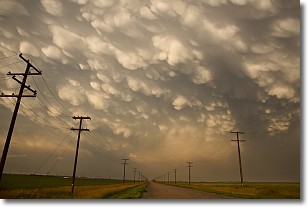
A mammatus cloud is a cloud with a unique feature which resembles
a web of pouches hanging along the base of the cloud.
In the United States, mammatus clouds tend to form in the warmer months, commonly
in the Midwest and eastern regions.
While they usually form at the bottom of a cumulonimbis cloud, they can also form
under altostratus, altocumulus, stratocumulus, and cirrus clouds. Mammatus clouds
warn that severe weather is close.
Next Topic: Nimbostratus Clouds
Weather Topic: What is Precipitation?
Home - Education - Precipitation - Precipitation
 Next Topic: Rain
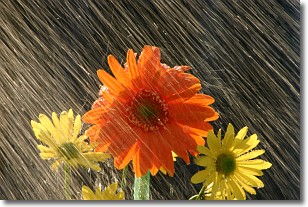
Precipitation can refer to many different forms of water that
may fall from clouds. Precipitation occurs after a cloud has become saturated to
the point where its water particles are more dense than the air below the cloud.
In most cases, precipitation will reach the ground, but it is not uncommon for
precipitation to evaporate before it reaches the earth's surface.
When precipitation evaporates before it contacts the ground it is called Virga.
Graupel, hail, sleet, rain, drizzle, and snow are forms of precipitation, but fog
and mist are not considered precipitation because the water vapor which
constitutes them isn't dense enough to fall to the ground.
Next Topic: Rain
Current conditions powered by WeatherAPI.com