Weather Alert in Colorado
Red Flag Warning issued February 15 at 10:39PM MST until February 17 at 8:00PM MST by NWS Goodland KS
AREAS AFFECTED: Yuma; Kit Carson County; Cheyenne; Cheyenne; Rawlins; Decatur; Norton; Sherman; Thomas; Sheridan; Graham; Wallace; Logan; Gove; Greeley; Wichita; Dundy; Hitchcock; Red Willow
DESCRIPTION: For Tuesday, low relative humidity and sustained winds around 40 mph will lead to extreme fire spread for any fires that ignite. Southwest winds will change to west behind a cold front in the afternoon. Blowing dust may also occur near open fields or other source regions causing reductions in visibility and poor air quality. The National Weather Service in Goodland has issued a Red Flag Warning for wind and low relative humidity, which is in effect from 10 AM MST /11 AM CST/ to 8 PM MST /9 PM CST/ Tuesday. The Fire Weather Watch is no longer in effect. * AFFECTED AREA...Fire Weather Zones 001 Cheyenne, 002 Rawlins, 003 Decatur, 004 Norton, 013 Sherman, 014 Thomas, 015 Sheridan, 016 Graham, 027 Wallace, 028 Logan, 029 Gove, 041 Greeley, 042 Wichita, 079 Dundy, 080 Hitchcock, 081 Red Willow, 252 Yuma, 253 Kit Carson and 254 Cheyenne. * TIMING...From 10 AM MST /11 AM CST/ to 8 PM MST /9 PM CST/ Tuesday. * WINDS...West-Southwest 30 to 40 mph with gusts up to 65 mph. * RELATIVE HUMIDITY...Around 10 percent. * IMPACTS...Extremely dangerous and erratic fire behavior. Any fires that develop will rapidly grow and spread out of control.
INSTRUCTION: Comply with burn bans and regulations. Avoid driving on dry grass or brush. Maintain vehicle brakes and tires and secure tow chains to avoid dragging. Never toss lit cigarettes onto the ground. Evacuate if fire/smoke is heading your way, or if ordered to do so by local officials.
Want more detail? Get the Complete 7 Day and Night Detailed Forecast!
Current U.S. National Radar--Current
The Current National Weather Radar is shown below with a UTC Time (subtract 5 hours from UTC to get Eastern Time).

National Weather Forecast--Current
The Current National Weather Forecast and National Weather Map are shown below.

National Weather Forecast for Tomorrow
Tomorrow National Weather Forecast and Tomorrow National Weather Map are show below.

North America Water Vapor (Moisture)
This map shows recent moisture content over North America. Bright and colored areas show high moisture (ie, clouds); brown indicates very little moisture present; black indicates no moisture.

Weather Topic: What are Mammatus Clouds?
Home - Education - Cloud Types - Mammatus Clouds
 Next Topic: Nimbostratus Clouds
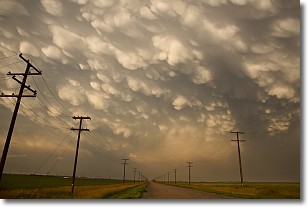
A mammatus cloud is a cloud with a unique feature which resembles
a web of pouches hanging along the base of the cloud.
In the United States, mammatus clouds tend to form in the warmer months, commonly
in the Midwest and eastern regions.
While they usually form at the bottom of a cumulonimbis cloud, they can also form
under altostratus, altocumulus, stratocumulus, and cirrus clouds. Mammatus clouds
warn that severe weather is close.
Next Topic: Nimbostratus Clouds
Weather Topic: What is Precipitation?
Home - Education - Precipitation - Precipitation
 Next Topic: Rain
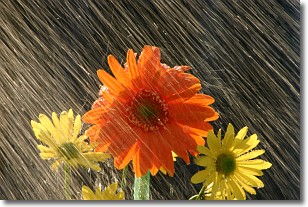
Precipitation can refer to many different forms of water that
may fall from clouds. Precipitation occurs after a cloud has become saturated to
the point where its water particles are more dense than the air below the cloud.
In most cases, precipitation will reach the ground, but it is not uncommon for
precipitation to evaporate before it reaches the earth's surface.
When precipitation evaporates before it contacts the ground it is called Virga.
Graupel, hail, sleet, rain, drizzle, and snow are forms of precipitation, but fog
and mist are not considered precipitation because the water vapor which
constitutes them isn't dense enough to fall to the ground.
Next Topic: Rain
Current conditions powered by WeatherAPI.com