Weather Alert in Utah
High Wind Warning issued February 16 at 5:47PM MST until February 17 at 5:00AM MST by NWS Salt Lake City UT
AREAS AFFECTED: Great Salt Lake Desert and Mountains; Tooele and Rush Valleys
DESCRIPTION: * WHAT...South winds 30 to 40 mph with gusts up to 60 mph, with localized downslope winds over 70 mph possible along portions of I-80 north of the Oquirrh, Stansbury, and Cedar Mountains. * WHERE...Great Salt Lake Desert and Mountains and Tooele and Rush Valleys. * WHEN...Until 5 AM MST Tuesday. * IMPACTS...High winds may move loose debris, damage property and cause power outages. Travel could be difficult, especially for high profile vehicles and vehicles with trailers. * ADDITIONAL DETAILS...Areas of blowing dust will reduce visibility below 2 miles at times on I-80, particularly between Wendover and Grantsville.
INSTRUCTION: Winds this strong can make driving difficult, especially for high profile vehicles and vehicles with trailers. Use extra caution. Blowing dust will reduce visibility at times. Slow down and use extra caution in areas of blowing dust. People are urged to secure loose objects that could be blown around or damaged by the wind.
Want more detail? Get the Complete 7 Day and Night Detailed Forecast!
Current U.S. National Radar--Current
The Current National Weather Radar is shown below with a UTC Time (subtract 5 hours from UTC to get Eastern Time).

National Weather Forecast--Current
The Current National Weather Forecast and National Weather Map are shown below.

National Weather Forecast for Tomorrow
Tomorrow National Weather Forecast and Tomorrow National Weather Map are show below.

North America Water Vapor (Moisture)
This map shows recent moisture content over North America. Bright and colored areas show high moisture (ie, clouds); brown indicates very little moisture present; black indicates no moisture.

Weather Topic: What is Evaporation?
Home - Education - Precipitation - Evaporation
 Next Topic: Fog
Evaporation is the process which returns water from the earth
back to the atmosphere, and is another crucial process in the water cycle.
Evaporation is the transformation of liquid into gas, and it happens because
molecules are excited by the application of energy and turn into vapor.
In order for water to evaporate it has to be on the surface of a body of water.
Next Topic: Fog
Weather Topic: What are Fractus Clouds?
Home - Education - Cloud Types - Fractus Clouds
 Next Topic: Freezing Rain
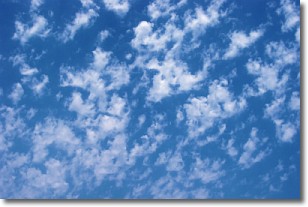
A fractus cloud (scud) is a fragmented, tattered cloud which has
likely been sheared off of another cloud. They are accessory clouds, meaning they
develop from parent clouds, and are named in a way which describes the original
cloud which contained them.
Fractus clouds which have originated from cumulus clouds are referred to as
cumulus fractus, while fractus clouds which have originated from stratus clouds
are referred to as stratus fractus. Under certain conditions a fractus cloud might
merge with another cloud, or develop into a cumulus cloud, but usually a
fractus cloud seen by itself will dissipate rapidly.
They are often observed on the leading and trailing edges of storm clouds,
and are a display of wind activity.
Next Topic: Freezing Rain
Current conditions powered by WeatherAPI.com